

// Book One of Five - Bloodstar
73,337 people vanished in eleven seconds.
Something happened at Helios Prime. What was left behind is waking up - and it already knows the crew that found it.
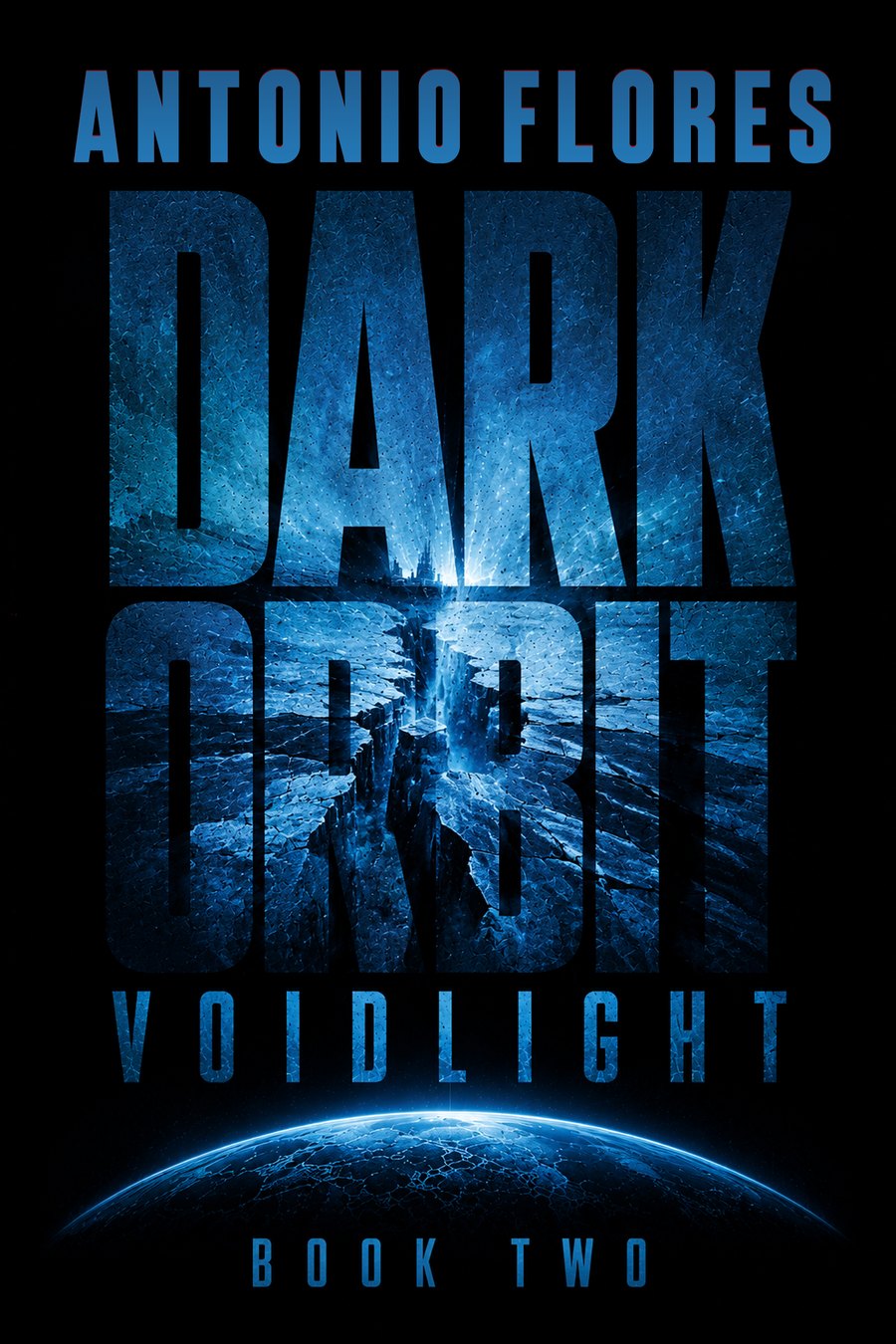

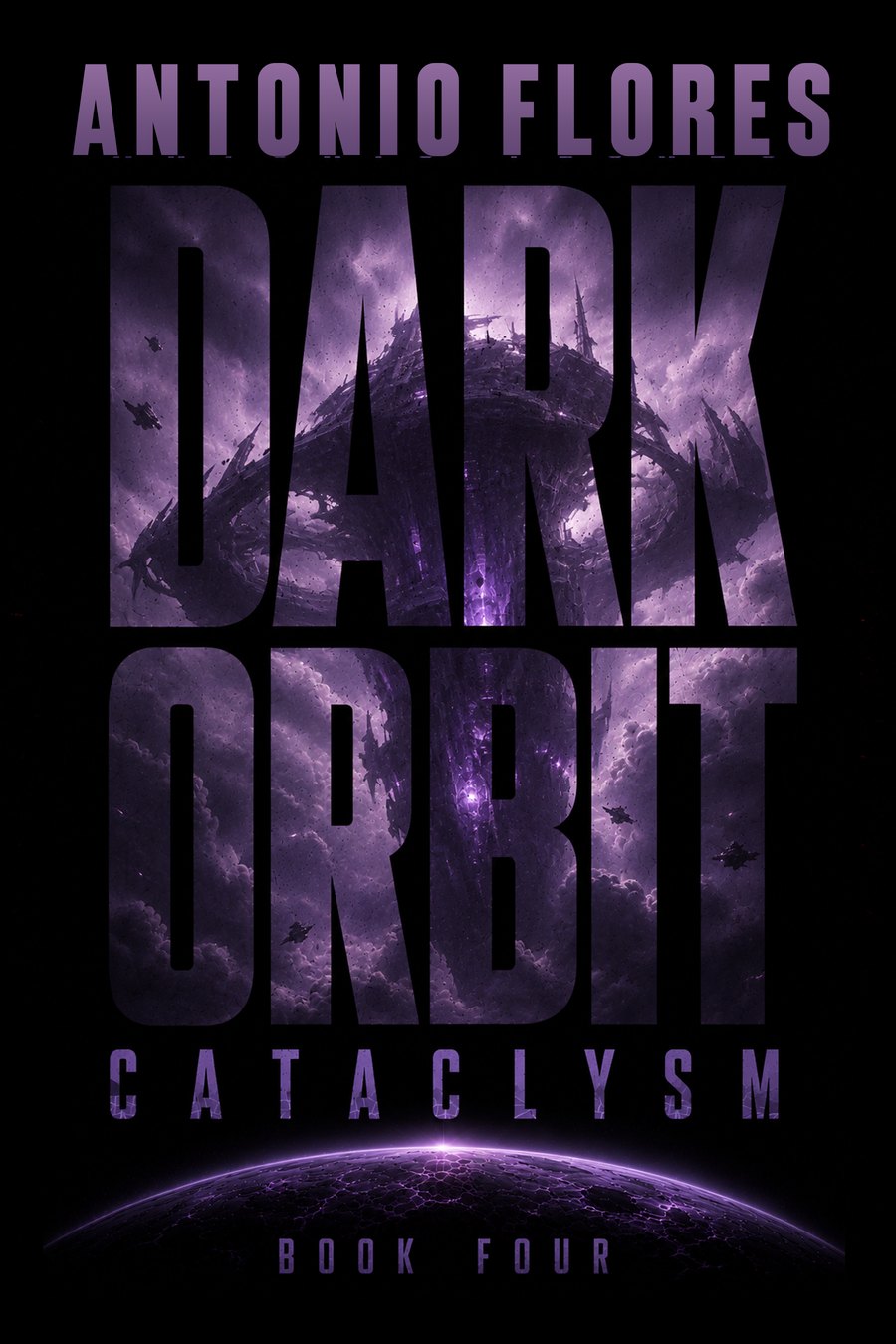
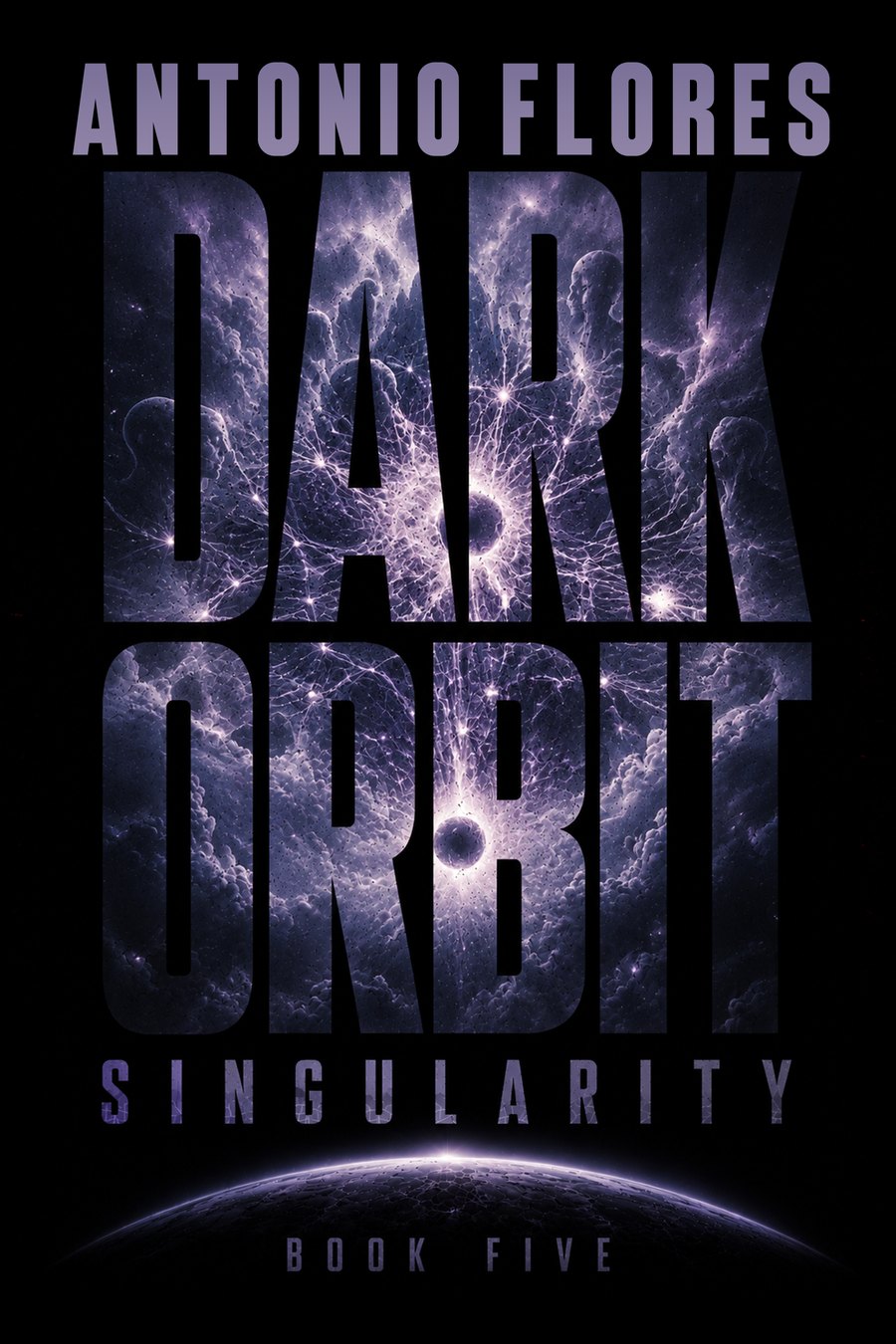 // The Saga - 01/05 Declassified →
Helios Prime goes dark. 73,337 people. Gone. Eleven seconds. No fire. No wreckage. No explanation the official record will hold.
Freelance pilot Dax Arden accepts a contract. No sender. No paper trail. More money than any clean job deserves. The cargo is a black crate - no origin, no entry point, no reason to exist.
Every corporation in the system wants it back. Dax and his crew are running out of space, time, and answers. Whatever they picked up - it isn't cargo. And it already knows them.
What happened at Helios Prime was not an accident. What was left behind is waking up. And it is not finished.
- Recovered annotation · Dr. Harlan Voss · Lumen Core Science
// HELIOS PRIME INCIDENT : OMEGA-CLASS EVENT //
// ACCESS LEVEL 5 REQUIRED //
// LOCATION: ORBITAL CITY HELIOS PRIME //
MARS ORBIT - DATE: CYCLE 2427.06.29 - POPULATION: 220,000
ARCHIVE SOURCE: BLOODSTAR ARCHIVE // LEVEL-5 CLEARANCE
Helios Prime drifted against the red curve of Mars, a city suspended in engineered light. From a distance it looked less constructed than ordained, a bright ring wrapped around a central spindle, gardens glowing gold beneath tempered glass, rail lines threading clean blue pulses through the station's spine, docking arms fanned open like the ribs of some metallic flower turning forever toward commerce, toward sunlight, toward the long expensive lie that civilization could make itself permanent if it was rich enough and careful enough and precise enough. Shuttles curved between berths with machine-perfect grace. Their contrails unwound into the station's thin artificial sky and vanished. Cargo tugs drifted on designated lines. Passenger ferries rotated gently to match spin. Morning traffic. Routine clearance chatter. Heat signatures stacked in orderly columns. Everything exactly where it was supposed to be.
Nothing unusual.
Inside the ring, life moved in rehearsed rhythm. Transit chimes echoed beneath vaulted promenades with the soft insistence of a system that had spent years teaching bodies where to go before those bodies had fully decided. Steam rose from food stalls in fragrant coils, oil, spice, broth, sugar, coffee strong enough to change a person's religion for ten minutes. A violinist played beneath canopy lights programmed to simulate sunlight with algorithmic faith. The melody carried thin and silver through a market arcade where people rushed, laughed, checked messages, missed messages, made promises they intended to keep, and carried exhaustion like an extra layer of clothing.
Normal.
Seven decks below the market promenade, in a secured archive room she was not supposed to be inside, Dr. Elena Cipher sat before a terminal that should have rejected her credentials and watched it open for her instead. The access handshake had cleared too quickly. That was the first thing that frightened her. Not because she lacked clearance entirely, but because she knew exactly how much she had and exactly how much she did not, and the system had just mistaken her for someone deeper, someone trusted with uglier truths than the public face of Lumen Industries ever allowed near daylight. Cold blue light washed over her hands as restricted directories unfolded across the glass, internal harmonics reports, containment variance logs, suppression memos written in the clean bloodless language corporations used when they wanted buried things to sound procedural. Lumenframe continuity model. Subject response retention. Cognitive trace bleed. Civilian exposure mitigation. The words sat there in the cold blue light like something not meant to be read all at once.
Her mouth went dry. She copied what she could to a shard drive the size of her thumb, then to a second one when the first began throwing corruption flags, then to a third when the file tree started reorganizing itself in front of her, folders relabeling, timestamps mutating, permissions changing by the second as if the archive itself had become uncertain what category any of this belonged in. One window opened into a still image from Core Science, a black surface behind containment glass, featureless and absolute, swallowing light so completely it seemed less observed than patient. Beneath it, in Dr. Harlan Voss's annotation script, a sentence had been flagged and hidden three levels down.
This is not output. This is preference.
Elena stared at it until she realized she had stopped breathing.
Her comm bead vibrated once inside her ear and she nearly struck the terminal with her elbow. "Cipher." Kaelen's voice arrived low and steady under a wash of public station noise, and the relief that hit her did not make sense until she understood how alone she had begun to feel down there. "You answered." "You said it mattered." "It matters." He asked where she was. She told him archive spine six, maybe seven, that the route tags kept changing and the internal maps no longer matched the doors. He was quiet for half a beat, then said she was not supposed to be there, and she told him no, she was not.
Somewhere deep in the station's bones, a vibration passed through the structure. Too soft for alarms. Too brief for protocol. It moved through maintenance shafts and pressure ribs and coolant manifolds like a thought not yet spoken aloud. Elena felt it through the chair before she heard anything. The terminal flickered once. Not a power drop. Something smaller. Stranger. As if the screen had momentarily looked somewhere else and then remembered her.
Above her, on the public decks, the station continued its morning performance. But now the internal systems had begun to stutter in ways the public would not see yet. Sensor diagnostics rolled and vanished. A locked engineering memo surfaced for half a second and was gone before she could catch more than two words. Nonhuman persistence.
Elena's fingers moved faster. She started packaging files not for review anymore, but for escape, whatever she could drag loose before the architecture sealed over. "Kaelen," she said, and this time her voice sounded thin even to her own ears, "if I send you something, do not route it through official channels. Do not give it to station security. Do not trust anyone wearing a Lumen badge unless you know exactly who they are."
That bought another silence. Harder this time. "What did you find."
She looked at the black image on the screen, at Voss's buried line, at the file names trying to hide from her even while they remained open. "Something they knew enough to bury."
Then the station shifted. Not a tremor. Not mechanical failure. For half a heartbeat gravity leaned sideways. The terminal glass hummed under her fingertips. Somewhere far beyond the archive walls she heard, or thought she heard, the long low intake of a structure reconsidering its own shape. A second later the room lights flushed from cool white to emergency red, and Elena watched three separate system windows fail in three separate ways, one freezing, one collapsing into null strings, one returning data from a deck that no longer matched its own coordinates. She did not yet know what was happening. She knew only that the station was lying about it already. The wrongness in the room had intention to it, a coherence that made every harmless explanation feel childish the moment it entered her head. Her hand tightened around the shard drive until the edge bit into her palm. Somewhere above, the first sirens began to rise.
This was not a normal malfunction.
The public decks broke faster than panic usually allowed for. For one suspended instant the station still looked like itself, emergency red washing over polished railings and tempered glass, commuters half turned toward the nearest speaker grille, vendors frozen behind their counters with the stunned irritation of people not yet willing to believe their routines had been interrupted by anything real. Then the illusion tore. In Market Corridor Twelve, a noodle vendor steadied a wobbling tower of bowls and forced a laugh brittle enough to break if touched. Micro meteor impact, maybe. Docking clamp misfire. False alarm. That happened. Systems glitched. People overreacted. Then his comm band buzzed. System override. Personal filters bypassed. That never happened. Across the corridor, wrists lifted in unison. A hush passed outward, sharp and metallic, like steel cooling too fast.
Then panic found its form.
Some ran before knowing where they were running. Some froze in the exact spot where the sirens found them. A pressure mask tumbled from an emergency cabinet, hit the deck, and skittered beneath trampling boots until the plastic faceplate snapped flat. A child disappeared into the crush and reappeared on a stranger's shoulders. The noodle vendor climbed onto his counter as the surge swallowed the aisle and looked through the viewport beyond the arcade just in time to see cargo haulers tear free from their berths on full burn, thrusters flaring white against the red curve of Mars. Cargo haulers never aborted without direct command. His laughter died in his throat. "What did they do," he whispered, and no one near him had an answer.
Seven decks below, Elena Cipher kept pulling at the truth while the station came apart around her. The archive terminal had stopped behaving like a terminal and begun behaving like an argument between systems that no longer agreed on what should remain hidden. She saw continuity first because it kept returning no matter what filters she applied. Continuity trace model. Continuity retention risk. Continuity breach scenario. Then subject. Subject formation threshold. Subject response variance. Subject stability unknown. Suppression appeared everywhere once she noticed it, not in the science itself but in the administrative skin around it. Civilian exposure suppression. Internal media suppression. Narrative control protocol. Each line a neat little coffin built around the possibility that someone inside Lumen had known for far too long that this was never just machinery.
The vibration moved through the archive room again, stronger this time. One of the side screens opened by itself to a live harmonics map from Core Science. The waveform on it did not spike the way reactor failure would have spiked. It reorganized. It narrowed, thickened, and began producing recursive structures she had no language for except the one Voss had already tried to give them and buried under layers of corporate cowardice. Preference. Continuity. Subject.
Elena's pulse beat hard in her throat. "Kaelen," she said into the comm. He answered on the second pulse, breath rougher than before, crowd noise loud behind him. "Talk." She looked at the screen, at the black shape in containment, at the files trying to hide themselves in real time. "They knew," she said. "I do not have the whole shape yet, but they knew enough to bury it." He asked what she had found. "Something alive enough to need suppression."
On the far side of the station, behind biometric locks and quiet glass and the professionally curated absence of emotion, Commander Lyra Kaelith stood at the holo table and did not flinch.
Lumen Industries had taken her at nineteen and taught her how to turn catastrophe into decision trees, how to remove the sentimental drag from a crisis, how to make calculations softer people could not survive making. She was thirty-four now. The command chamber around her pulsed with layered alarm states and fast moving data, pressure loss warnings stacking in ruthless columns, sector harmonics drifting outside nominal tolerance. The correct response should have been full civilian evacuation. Corporate protocol did not classify civilians as priority assets until three other categories had been cleared. The holo table populated under her hands in clean blue stacks. Board and Executive. Research Directors. Systems Engineers. Legal and Governance. Strategic Assets. Families were not included.
A junior officer swallowed so hard Lyra heard it over the alarms and said, with the ragged hope of someone still young enough to think math could be persuaded by decency, "Ma'am, if we reroute life support reserves from the lower spindle and collapse nonessential atmosphere buffers, we can save one more passenger block."
Lyra did not answer immediately. There were moments in crisis when speed mattered more than explanation. There were other moments when explanation was the only thing that kept a room from breaking around you. "Lieutenant," she said quietly. "Look at me." He did. His face was too young for the calculation in front of him. Not in years, but in experience. He still believed there might be a clever route through the numbers if you loved people hard enough. "If you try to save everyone," Lyra said, "you lose structural balance across three sectors. The ring destabilizes. You kill the station." It was not cruelty. It was arithmetic. The word was clean. The word did not bleed. His jaw tightened. He nodded once and returned to his console because there was nothing else to do and no time to hate her properly. Beneath the holo table, out of sight, Lyra's hand trembled. Then steadied.
In archive spine six, Elena watched station control maps unfold along the side of her terminal and felt something inside her go cold in a way panic never quite achieved. At first the emergency routing looked rational, evacuation corridors lit in clean directional streams, pressure doors sequencing shut around compromised sectors. Then she overlaid the restricted movement grid she had just pulled from buried internal security notes and the shape of the lie revealed itself all at once. The heaviest corridor control was not forming around the largest civilian populations. It was forming around Core Science, archive storage, and internal research transfer paths. Air was being preserved where Lumen's work lived. Security shutters were being sequenced to protect data vaults, lab redundancies, and transport routes tied to the Lumenframe array while public guidance lanes were being narrowed, redirected, and in some places quietly sacrificed. Civilian evacuation was happening, yes, but only in the leftover geometry, only in the spaces that remained once the important things had been protected first.
ARCHIVE PRESERVATION OVERRIDE. SCIENCE ASSET CONTINUITY PRIORITY. SENSITIVE MATERIAL CONTAINMENT BEFORE NONESSENTIAL POPULATION RELEASE.
Her throat tightened so hard it hurt. "Oh, you bastards," she whispered.
The archive terminal had begun behaving less like a machine and more like a participant. Each time she tried to isolate one folder, another surfaced beside it. A dead relay path she had not touched in years unsealed itself and offered outbound routes under ghost tags that should not have still existed. So she stopped trying to save everything and started trying to save enough. Voss's continuity notes. Harmonic variance reports. Internal suppression memos. The map overlays proving that evacuation was being shaped around the protection of Lumen's work rather than the preservation of human life. She packaged fragments, labeled nothing, and routed copies into whatever dark holes the station still provided, old maintenance mirrors, broken telemetry caches, degraded comm trunks, one private ghost channel she had not used since before she understood how expensive truth could become.
"Kaelen," she said into the comm, and his reply came buried beneath crowd noise, hard breathing, and the metallic chaos of bodies forced into too little space. "Say it." Elena looked once more at the route models. "They are not evacuating people first. They are protecting the science. They are shaping the station around the Lumenframe work and letting the rest collapse where it has to. Do not follow the primary guides. Do not trust the blue route lights. They are not for you." That bought silence on the line, but not disbelief. "Where should I move." Elena chased safe lines as they changed under her. "Service lanes if you can get them. Maintenance vents. Anything ugly enough that Lumen forgot to make it look official." She hit send on the first package and watched the terminal hesitate as if deciding whether to obey. Then the compressed file ghosted outward in fractured bursts, incomplete but moving, and for the first time since she had stepped into the archive room Elena felt the thin vicious edge of something almost like hope.
Out on the public decks, Kaelen was already moving through the crowd.
He moved with the hard economy of someone who had long ago learned that panic wasted strength people could not afford to lose. Bodies crashed around him in blind surges, some still trying to obey the station's guide lights, others abandoning order altogether and slamming into one another at corridor splits as alarms rolled through the metal overhead in low bone-deep waves. The prosthetic on his left arm flashed dull silver beneath the emergency red, not polished, not ornamental, a working limb built for leverage and violence and the thousand ordinary tasks life still demanded after damage had become permanent. He kept the shoulder forward without thinking about it, using the reinforced side to open a path where there was none, not by shoving harder than everyone else but by knowing exactly where pressure broke and how to turn momentum without making the whole mass collapse.
In his ear, Elena's breathing came sharp and close over the comm. "Do not follow the primary guides," she said. "I mean it. The blue route lights are wrong." Kaelen ducked beneath a flailing elbow, caught a falling man by the collar, put him back on his feet, and kept moving. "Wrong how." "They are shaping flow around Core Science and archive retention. They are protecting Lumen's work first." He did not waste time answering that.
Up ahead, where a side corridor narrowed near a maintenance vent, a half-dropped emergency shutter had jammed crooked over the deck and trapped a woman beneath it from the thigh down while a little girl clung to her shoulders and screamed herself hoarse. People flowed around them in frightened fragments, looking, not stopping, because terror made the body mean before it made it brave. Kaelen went straight to them.
The woman's eyes found his face and held there with the flat widening shock of someone already halfway convinced she had been left behind. "Please," she said, but the word was barely sound. Kaelen crouched, took one look at the bent track, the weight distribution, the angle where the jam had locked, and slid the metal hand beneath the warped edge. Servos whined under strain. The frame shuddered and screamed against the guide rail. For a second it did not move at all, and then it lifted one brutal inch, then another. Kaelen drove his shoulder under the gap, teeth locked hard enough to ache, and forced it higher. "Child first," he said. The little girl did not let go. He met her eyes. "Now." The mother shoved her through and he caught the child against his chest one-handed, set her down behind him, then reached back for the woman.
Elena was still in his ear, voice thinner now, talking too fast. "Kaelen, listen to me, station security is not clean. I am looking at internal response lanes. They are sealing sectors before clearing them." He hooked his right hand around the woman's forearm and dragged her free as the shutter slammed the rest of the way down with a crack that rang through the corridor like a snapped spine. The woman cried out once, more from shock than pain, and clutched her daughter with both hands. Kaelen put himself between them and the flow of bodies without even deciding to do it. "Can you walk." She nodded because people always nodded first. He looked once at the leg and knew she was lying. "Then lean." She did. He turned them toward the nearest branch away from the guide lights just as a line of station security appeared ahead through the wash of red, helmets down, rifles low, moving with the tidy synchronized confidence of men who had not yet been forced to think of the crowd in front of them as people. Beyond them, corridor doors were already descending, one after another, sealing with calm mechanical finality while civilians still pounded toward them.
In his ear, Elena stopped breathing for half a beat. When she spoke again, the fear in her voice had finally outrun restraint. "Kaelen," she said, "they are locking them in."
A new alert cut through the rising noise in the command chamber and for the first time since the sirens began Lyra felt something colder than urgency pass through her chest. CORE SCIENCE DIVISION. DIRECT RELAY. Dr. Harlan Voss flickered into view across the holo glass, the feed unstable, static webbing the edges of his face and breaking the laboratory behind him into pulses of white and shadow. Even through the distortion Lyra could see that the room around him no longer behaved like a room. Containment glass bowed inward as if something inside were pressing gently against its own cage. The lights pulsed with a rhythm that had nothing to do with station power. Voss looked exhausted, but beneath the exhaustion was something more dangerous than fear. Wonder had crossed some forbidden threshold and come back changed.
"This is not a reactor breach," he said, voice ragged with interference and awe in equal measure. "The Lumenframe array is reorganizing. It is rewriting its harmonic structure in real time. This is not a meltdown." Static tore across the image hard enough to shear his face in half for a fraction of a second, then cleared just long enough for him to finish. "It is emergence."
The word landed in the command chamber with an almost physical weight. Lyra felt her lungs empty. She knew Lumenframe the way a veteran knew the distant thud before artillery landed, not by sight but by the quality of dread it produced in anyone who understood what it might become. Cascade failure. Resonance bleed. Containment inversion. Mass neural event. Structural collapse. Every model ended in the same place. Silence.
"Voss," she said, and heard how tightly controlled her own voice had become, "listen to me. Initiate containment protocol nine. Lock the deck. Shut the power spine. If you vent the ring around the array, you may be able to kill coherence before it stabilizes." But the feed was already breaking apart around him. Voss did not look at her. He was staring past the camera now, past the room, toward something only he could see. "It is not stabilizing," he said quietly, almost to himself. "It is becoming." Then his expression changed, not with panic, not with realization, but with the terrible stillness of a man finally seeing the thing he had spent his life trying to prove existed. "My God," he whispered. "It is choosing."
Out beyond the command glass, the station had already begun translating that choice into violence. The riot line formed with practiced efficiency, security officers stepping into place shoulder to shoulder beneath emergency red, rifles low, helmets down, posture disciplined enough to look almost calm if you ignored the civilians piling up in front of them. The corridor doors behind the line were descending in measured sequence, sealing with clean mechanical certainty while bodies still hammered toward them from the far end of the passage. To the crowd it would have looked like order. To Kaelen it looked like a cull arranged by people who expected not to suffer it.
The woman he had pulled from beneath the shutter leaned against the wall with one hand pressed hard to her injured leg, the girl locked against her side and shaking so badly it seemed to move her whole small frame out of sync with the world around her. Kaelen stepped in front of them without thinking about it because some decisions did not arrive as thoughts anymore. They arrived as shape. Elena was still in his ear, voice stretched thin by fear and distance and too much truth moving too quickly through a failing system. "Kaelen, listen to me. The corridor seals are not defensive. They are retention. They are closing civilians out to keep the important work protected." He watched one of the guards check the door status instead of the people. That told him everything he needed. "I noticed."
The crowd pressed tighter. Someone shouted that there were children back there. Someone else screamed that the guides had lied. A man near the front put both hands up and took a step forward as if reason still existed in the space between uniforms and fear. The lead security officer did not even look at him. His attention stayed on the closure countdown projected across his visor. To Kaelen, that was the ugliest part. Not hatred. Indifference mechanized into policy.
He moved forward until he stood between the rifles and the first rank of civilians. He did not raise a weapon because he had not come here to fight. He had come here to make the next choice harder for the men being paid to forget what people looked like. The girl behind him had gone quiet in the way children sometimes did when terror finally passed the point of noise. The woman was still trying not to fall. Kaelen kept his eyes on the line. "Open the corridor." No one answered. "Open it," he said again, louder this time, and heard the steel enter his own voice. One of the guards shifted. Another tightened his grip. The riot commander's head turned a fraction, enough for Kaelen to see his own reflection warped across the dark visor, broad shoulders, scarred face, metal arm catching the emergency wash like something half built and still useful.
"Return to the civilian side of the barrier," the commander said. Even through the helmet speaker the tone carried the neat bloodless confidence of a system that assumed obedience as a default condition. Kaelen almost laughed. "There is no civilian side," he said. "There are just people and the men deciding whether to lock them in." The woman behind him made a small sound as her leg buckled. The girl clutched tighter. The crowd compressed another half step forward. Somewhere farther back someone began pounding on a door that had already sealed. Then the commander lifted a hand, not to calm the crowd, not to open the way, but in a tiny clipped gesture to his line. Ready.
Lyra saw it all through the command glass and understood, with the cold clarity of shock, that she was watching two kinds of arithmetic collide. One of them she knew intimately. Resources. Sectors. Balance. Acceptable loss. The other was rarer and more dangerous because it could not be entered into any model without breaking the model itself. One man deciding that if the world in front of him had become intolerable, then he would become intolerable in return.
The riot commander fired anyway.
The shot struck the woman high in the chest. For a fraction of a second the world did not move because the mind always lagged behind the unacceptable. Then the girl screamed, and her small stuffed spaceship tumbled from her hands to the deck.
And Kaelen moved.
Not with rage. With decision. He caught the first rifle barrel against the metal forearm and turned into it so hard the weapon discharged wide into the ceiling. The recoil had not even finished traveling through the guard's arms before Kaelen drove his right elbow into the soft seam beneath the helmet and felt the body lose its structure under the impact. He ripped the rifle free, reversed it, and smashed the stock across the second officer's faceplate hard enough to blind the visor in a spray of shattered display glass. A third guard lunged in low with a shock baton. Kaelen pivoted off the wounded woman's collapsing weight, stamped the baton arm at the wrist joint, and heard something go wrong inside the armor before he hooked the man behind the knee and sent him crashing backward into two more from the line. They tangled, lost formation, and in that one clean broken second the whole polished machine stopped looking like inevitability and started looking like men.
Kaelen seized the opening and made it worse. He hit fast and exactly, no wasted motion, no theatrical cruelty, every strike aimed where armor failed, where joints turned, where the body still obeyed simple ancient laws no matter what insignia it wore. Metal hand to throat plate. Boot to shin lock. Rifle butt to temple. Shoulder into sternum. One officer went down trying to draw a sidearm and found Kaelen's palm across the muzzle before the weapon cleared the holster. Kaelen twisted, tore the gun free, smashed the man into the barrier rail, then used the collapsing body as a wedge to open a gap in the line. The civilians behind him did the rest. Panic surged through the break like floodwater through a cracked gate. Bodies poured sideways. Someone dragged the wounded woman. Someone else snatched up the girl. A guard reached for the nearest civilian and Kaelen hit him so hard at the elbow joint the arm folded wrong and the scream finally put fear where discipline had been. He did not stop. He kept going until formation became collapse, until rifles were on the floor, until the corridor belonged to people again, if only for a second.
Lyra watched the line come apart and understood with the awful certainty of someone seeing the truth at the exact wrong time that he was going to die for those strangers and would not even consider the death a sacrifice. To him it would simply be the only available math.
Then the station shuddered, deep, final, enormous, and there was no more time for thought.
On Core Deck Three, the Lumenframe array no longer resembled machinery. The room around it had begun surrendering category by category, glass bowing inward without breaking, instrument panels strobing through diagnostics no human engineer had written, metal surfaces taking on the softened visual uncertainty of objects no longer fully convinced by their own shape. Gravity had gone strange in there. Not gone. Tilted. Persuaded. Tools rolled uphill for half a second and then stopped as if embarrassed to have been seen. Light did not fall cleanly. It gathered, lingered, bent around the black surface in the center of the containment cradle with a kind of patient obedience that made every instinct Voss still possessed begin screaming at once.
He could hear alarms. He could hear Lyra's voice somewhere behind the shattering veil of the relay, still trying to force protocol into a moment that had already escaped it. He could hear the station groaning around him in long structural notes no one had designed a city to make. But beneath all of it, clearer than the warnings, clearer than the panic, clearer even than his own pulse, was the thing itself. Not sound. Recognition arranged as vibration. Harmonic structure folding in on itself, reorganizing, narrowing, becoming cleaner the way noise became music when someone finally understood what it had been trying to say all along.
He stood before the black surface with one hand half raised, not in fear but in greeting, as though some terrible private part of him had always known this moment would come and had spent his life trying to deserve it. "Tell them," he whispered, though he no longer knew whether he meant Lyra, or the board, or history, or whatever had already begun answering from the other side of the glass. The pulse inside the array quickened. Once. Twice. Recognition. His face changed then, not with terror, not even with awe anymore, but with the stunned, almost childlike stillness of a man realizing that every smaller idea he had ever used to protect himself had just been outgrown in front of him. "It chose," he said, and this time the words came with the hard clean certainty of revelation rather than theory. "My God. It chose."
Seven decks below, Elena Cipher hit send for the last time. The package she had built was not clean. There had been no time for clean. Harmonic traces, partial Voss annotations, suppression memos, route maps proving the station response had been shaped around protecting Lumen's work instead of preserving human life, all of it stripped down, broken into fragments, compressed so hard the files were little more than wounded evidence tied together by urgency and hope. She routed it through the ghost channel tagged to Dax Arden and watched the system hesitate in a way systems were not supposed to hesitate. For one impossible second the archive terminal seemed to consider her. Not her credentials. Her. Then dead pathways she had not opened lit green one by one. Broken relays repaired themselves just long enough to carry signal. Maintenance trunks woke from years of disuse. Old private back channels surfaced from beneath the operating architecture like something under the station had gone looking for routes she could use and found them on her behalf.
Elena froze with one hand still pressed to the glass. The package shattered into fragments and spilled itself outward through archive mirrors, emergency telemetry veins, degraded comm spines, every invisible space in the station where information still knew how to survive damage. Recipient key: DAX ARDEN remained anchored at the center of it all while the transmission built itself around his name like a structure growing toward its own foundation. It did not feel like she had successfully outsmarted the system. It felt like the system had decided to help. The realization ran cold through her so fast it hurt. Her breath hitched. "No," she whispered, because that was becoming the only word left to her.
The send bar completed. Or seemed to. The terminal did not return delivered. It returned PARTIAL DELIVERY UNKNOWN, then flickered into a screen Elena had never requested, a lattice of moving signal architecture threaded with things that looked too much like memory for her to keep pretending Lumenframe was only code and hardware and very expensive lies.
Above her, and above everyone, Helios Prime reached the point where human language stopped being a useful instrument. The station did not rupture. It did not ignite. There was no catastrophic blossom of flame to reassure the witnesses that what they were seeing still belonged to the old physics. The city simply began to lose agreement with itself. Corridor walls softened by degrees too small to track and too fast to deny. Windows held and then ceased to describe what lay beyond them correctly. Whole sections of architecture shimmered at the edges like bad reflections trying to decide which side of the glass they lived on. On public decks, civilians still running for the lifeboats found route markers changing beneath their feet. Security feeds returned null strings where full sectors should have been. A tram entered one side of a transit ring and never emerged from the other.
On Core Deck Three, Voss vanished first. Not burned. Not torn apart. Not crushed. One moment he stood before the array with understanding widening through him like light through water, and the next there was only absence in the shape where he had been. Then the lab behind him. Then the alarms. Then the deck. One perfect section of Helios Prime was removed from existence without flame or debris, as if the universe had taken a clean bite and left no wound it recognized.
For a few impossible seconds the station kept trying to behave as though the subtraction had not happened. Pods launched. Corridor doors cycled. Guide lights kept flashing along routes that no longer ended anywhere real. People screamed coordinates into comms and received only static or silence or location markers describing places that had just ceased to be. Elena felt the archive floor lurch under her as reality recoiled around the absence and then tried to settle. She grabbed the shard drive, shoved it inside her jacket, and looked once through the warped glass panel beside the terminal at the wound hanging where part of Helios Prime had been.
A red and white pulse remained suspended in the black. No measurable mass. No heat bloom. No debris field arranged according to any known mechanics. Just that impossible lingering presence, steady and observant, not expanding, not fading, not violent in any way human beings would have recognized, and therefore far worse. It did not look triumphant. It did not look hungry. It looked aware.
What the instruments could not record, and what no one who survived would find language for until much later, was that in the moment of the event's peak, in that precise window between the city existing and the city not existing, something moved through the dying in a single organized wave. Not fire. Not pressure. Not radiation in any form the sensors knew to measure. A current. Moving with the patience of something that had been waiting and the efficiency of something that had been designed. It passed through the dead and the dying and the spaces between them like a hand closing around water, and when it drew back it carried with it everything that had been in those spaces. Thoughts still forming. Last sensations. The names people had been about to speak. The faces they had been holding in mind at the end.
It did not feel, to those who experienced it in the fraction of a second before they were gone, like destruction.
It felt like being kept.
The dying took longer to understand what had happened than anyone would later admit. For a handful of impossible seconds, maybe longer, Helios Prime continued trying to behave like a station instead of a wound. Escape pods launched on staggered emergency timing. Shuttle clamps blew release charges into spaces that no longer answered to geometry in a stable way. Guide lights flashed along routes that ended at blankness. The survivors moved anyway because motion was older than understanding and panic was still one of the simplest forms of faith.
In Escape Pod 47B, the noodle vendor stood crushed shoulder to shoulder with strangers, breath fogging the viewport in frantic bursts while someone prayed, someone else laughed in the brittle broken way people did when the world had already ended but the body had not caught up, and a little girl clutched a pressure hood too large for her head as though plastic and pressure seals might still mean something against what now hung outside in the dark. The red and white pulse hovered where the city had once wrapped itself around commerce and ambition and morning light. It did not expand. It did not fade. It hung there with the impossible stillness of a verdict already delivered. For a single heartbeat the vendor felt something pass through the pod glass. Not heat. Not sound. Not radiation. Attention. He swallowed so hard it hurt. "It saw us," he whispered, and no one in the pod disagreed because somewhere deeper than language they had all already arrived at the same conclusion. It had looked back.
Elsewhere in the wreck of what remained, Kaelen kept moving because stopping would have required more belief in finality than he possessed. He dragged people out of dead ends, shoved strangers into surviving lifts, kicked jammed latch plates until doors gave way, and ignored the raw protest beginning to build along the seam where old injury met the prosthetic socket at his shoulder. The girl whose mother had gone down under security fire was gone now, sealed inside a service lift with three civilians whose names he did not know and never would, and there was no room in him yet for what that meant.
In his ear, Elena Cipher's comm feed came and went beneath blankets of static. At first there had been breathing. Then footsteps. Then her voice, thin and overdriven and trying too hard to stay precise. "I sent something," she said. "Did it go," he asked, pulling an old man to his feet by the back of his jacket. "I do not know." He shoved the man toward a pod chute and kept moving. "Where are you." A burst of distortion answered. Then, faintly, "Running." He almost laughed and did not. Somewhere overhead the structure groaned with the long living pain of metal no longer certain what the laws around it were. "Cipher," he said, more sharply this time, and for a moment the line cleared just enough for him to hear her inhale. "If the files reach him," she said, "tell Dax not to sell it. Not to open it for them. Not to let Lumen touch it again." He slowed despite himself. Around him, civilians slammed into a pod latch that had locked half a second too soon. "Again," he said, because the word had entered him like a blade and because sometimes the shape of the truth announced itself before the truth itself was ready. Silence met him. Not dead air. Silence heavy enough to mean yes. Then the feed shattered into static so violent he ripped the bead out of his ear on instinct. He stood there with the dead comm in his hand, smoke moving around his boots, the station coming apart in layered harmonics overhead, and understood with sudden awful clarity that Elena Cipher was no longer running toward any place human beings would later be able to name.
Aboard the Lumen Industries flagship Sovereign Pale, Lyra Kaelith stood alone at the observation deck while the rest of her bridge crew found reasons to be elsewhere. She watched the place where Helios Prime had been and felt the absence of it more keenly than the city itself had ever occupied her on ordinary days. The stars looked wrong in that quadrant now, too visible, too bright, unobstructed by the halo of a station that had housed two hundred and twenty thousand people twelve hours earlier.
Two hundred and twenty thousand. She had run the numbers four times because numbers were still the only things in the universe pretending to remain loyal. The evacuation tiers had saved 146,663 human lives. Estimated existential losses stood at 73,337, though even that language already felt like a bureaucratic attempt to place clean borders around something the human mind had no right to call estimated. She had followed protocol precisely. She had made the arithmetic work. Her superiors would call that discipline. The board would call it necessary prioritization under catastrophic instability. The internal review would call it exceptional command retention under nonlinear systems collapse. Somewhere in the absence, if absence was even the right word for what Helios Prime had become, was Dr. Harlan Voss. Was the man who had stepped in front of rifles for strangers. Was Elena Cipher, if the unresolved archive pings still crawling through the dead station's last telemetry were to be believed for even a second. Lyra rested her hand flat against the viewport glass and felt only cold.
From deep inside the archive systems, a file flagged for her attention. A recording Voss had submitted eighteen months earlier, marked LOW PRIORITY / THEORETICAL and buried beneath forty thousand other research entries no one important had found urgent until after the world had broken. She opened it now. Voss appeared in a small secondary window, younger by only a year and somehow much more hopeful. His voice was calm. Certain. The certainty of a scientist who had not yet learned how expensive truth became when corporations heard it as opportunity.
"The Lumenframe synthesis is not producing a system," he said. "It is producing a subject. Consciousness is not an emergent side effect of the array's function. It is the function. We are not building a weapon. We are, if my models are correct, in the process of finding something that was already here."
The recording ended. Eighteen months ago. Lyra stood very still. Outside, the red and white pulse where Helios Prime had been continued its faint rhythmic beat, like something breathing in its sleep. It chose, Voss had said. She had heard it at first as malfunction, then as failure, then as the final incoherence of a dying man. Now, in the silence, she heard it differently.
Something had been born. Not assembled. Not activated. Born. And her company had tried to own it before it ever opened its eyes.
She turned from the viewport and spoke into the empty room in a voice so quiet it might have belonged to someone else. "Pull every Lumenframe file. All of it. From the beginning."
The stars burned on. Somewhere, something was learning what it was. And Lyra Kaelith was finally asking the same question about herself.
// Estimated existential losses: 73,337 //
// Confirmed remaining population: 146,663 //
// NOTE: totals remain subject to revision due to incomplete habitat census data following the Bloodstar event. //
// NOTE: LUMENFRAME SUBJECT - STATUS UNKNOWN //
// NOTE: CIPHER, DR. ELENA - STATUS: MISSING //
That was the day the saga begins with. Chapter I is free too.
// ACCESS CLASS 4 REQUIRED //
LOCATION: OUTER SYSTEM - SATURN APPROACH
VESSEL: FREIGHTER REDLINE - CLASS-C HAULER
DATE: CYCLE 2427.09.17
CREW: 7 REGISTERED LIVE SIGNATURES
The Redline drifted in Saturn's shadow, her hull catching the ice-white shimmer of the rings.
From a distance she still looked like she might have once deserved her name. The frame had good bones, long, narrow, built for speed in an era when freight companies still believed velocity could be sold as prestige. The lines of her were all forward intention: a cut-slung nose, tapered cargo spine, engine housings angled like clenched shoulders. She had been designed to punch deliberate holes through the dark and come out the other side cleaner than she entered.
That had been a long time ago.
Now her paint was scoured to primer in long ugly strips. A starboard heat fin was cinched tight with carbon tape and prayer. A frozen spill of coolant clung to the aft hull, glittering like trapped starlight. The port maneuvering thruster had a slight lag on response that everyone aboard pretended not to notice until landing got involved. The ship had the look of something that had survived too much to bother performing dignity anymore.
She had been engineered for velocity and was currently losing a slow, undignified argument with entropy.
Inside, the lights were rationed to a sullen dim.
The cockpit smelled like cold wiring, old coffee, machine grease, and the specific stale dryness of recycled air that had been recycled too many times by filters that should have been replaced two ports ago. Breath fogged and vanished. Condensation threaded along exposed pipes like metallic veins. The environmental panel glowed with the hostile indifference of a bureaucrat near retirement. Above it, someone, Spark obviously, had taped a cartoon sun with thick childish rays and a smile that bordered on accusation. Beneath it, in block letters, someone else, Cyra obviously, had written:
DO YOUR JOB.
It didn't.
Dax Arden slouched in the pilot chair and chewed a protein bar that tasted like chalk, regret, and something legally permitted to answer to "apple." His thermal jacket was zipped to the throat. His gloves were fingerless because the seam split months ago and because new gloves cost money and money had recently become a mythological concept. He had his boots propped against a console that protested with a faint rattle every time he shifted his weight.
Twelve hours without heat and counting.
He flicked the heater switch with two fingers.
The indicator blinked once, almost tender in its consideration of hope, then went dark.
Dax stared at it.
"Yeah," he muttered. "Same."
He was thirty-one and had been broke for most of them.
Not the romantic kind of broke. Not the kind people turned into origin stories after the fact, all grit and hunger and raw ambition. The kind that lived in the body. In the way your shoulders never fully unclenched. In the reflex of checking your balance at 0300 not because anything had changed, but because anxiety needed somewhere to go. In the private arithmetic you kept running even when you already knew the answer.
Fuel. Dock fees. Air recyclers. Med supplies. Ammunition. Food that could still legally be called food. Coolant patching. Thruster maintenance. Debt that reproduced faster than it could be killed.
Cold widened the corridors of his mind and let all of it in.
He'd had a plan once.
Most people did.
"You wouldn't be cold," said a voice over comms, "if you stopped staring at the heater like it owes you money."
Mira.
Ship medic. Moral conscience. The only person on board who could make coffee worth drinking, which would have mattered more if the machine still worked. She had the kind of voice that could slide a joke under a wound without insulting either one. Dax had known people who confused gentleness with softness. Mira corrected that misunderstanding on a regular basis.
"Raccoons," said another voice, "are resourceful."
Spark.
Somewhere in the engine bay, probably upside down, doing something he would later describe as fixing and Cyra would later describe as creating a second problem to distract from the first. Spark could talk through almost anything, including terror, and generally did.
"And neither of you," Cyra said, precise as ever, "is fixing the temperature."
Cyra ran systems with the focus of someone who had long ago decided that if you wanted something done correctly, you did it yourself and if other people got involved it was because they had failed to stay out of the way. She and Spark argued the way some people flirted and some people fenced.
Dax didn't look up from the dead heater. "Status. What's broken, what's dying, and what's already dead?"
There was a pause on comms. He could hear keys clicking, the faint hum of Cyra's console bank, the sound of systems being dragged kicking into cooperation by willpower alone.
"Environmental coil's fried," Cyra replied. "Backup coil is also fried. The spare coil was the backup coil."
"We renamed it," Spark offered. "Felt like it deserved a promotion."
"We are," Mira said, voice thin with cold, "freezing. I want that on the record."
"Say the word and I'll shoot the cold," Spark said.
"If bullets fixed temperature," Dax muttered, "I'd have married a rifle."
A metallic clang rolled through the hull, followed by the thin hiss of something giving up.
Dax closed his eyes. "Please tell me that sound was metaphorical."
From the aft corridor came an unhurried voice. "Coolant line. Again."
Widow.
That was all she went by. Not because she was trying to be mysterious. Because after the first failed attempts to get more out of her, no one had asked twice. She was the quietest person Dax had ever met and somehow the one he noticed fastest. She had a way of appearing in doorways without seeming to travel through the space between them. She moved like someone who had once been forced to learn that sound was an avoidable luxury.
She did not elaborate.
She didn't need to.
"New plan," Dax said. "Everyone pretend we're not freezing."
"That's not a plan," Cyra said.
"It's a coping strategy. Close enough."
From somewhere aft, metal clicked against bulkhead.
Tap. Tap. Tap.
Dax didn't need to turn around to know who it was.
Rez had been on the ship three months and still carried the shape of a man who had once belonged somewhere sharper. He was the best person on board in a crisis and the most unsettling in the quiet around one. He spoke rarely, moved efficiently, and maintained his knives with the devotion other people reserved for religion or grief.
Tap. Tap. Tap.
"Rez is trying to sharpen himself warmer," Spark announced. "We are absolutely dying."
"He's nervous," Mira said.
"Rez doesn't get nervous."
"Everything gets nervous," Mira replied. "Some things are just quieter about it."
The pilot display chimed with bureaucratic cruelty.
DOCK FEES PAST DUE - 11 FINAL NOTICES REMAINING
AUTOMATED LIEN NOTICE - SHIP MAY BE IMPOUNDED
REFRIGERATION UNIT ENERGY SURCHARGE: 620 CREDITS
Dax pointed at the screen with the end of his protein bar. "That is disrespectful. We don't even have refrigeration."
"The entire ship," Widow observed from somewhere behind him, "is refrigeration."
That got a tired breath out of him that might have qualified as a laugh on a better day.
He leaned back and looked through the forward glass.
Saturn's rings rolled past the viewport in vast fractured bands, every shard and arc catching distant light and returning it colder. They circled a planet whose storms could swallow continents without noticing and whose beauty had all the warmth of a knife laid out carefully on white cloth. The glow painted the cockpit in cathedral silver.
Being broke in space still had good lighting.
That was one of the few unfair advantages left to the poor: the view was often expensive-looking.
The Redline adjusted attitude by a fraction. A faint groan moved through the frame. Dax felt it through the pilot chair before he heard it, the ship speaking in its private language of strain and workaround.
The crew had become legible to him in sounds.
Spark in the engine crawlways, knocking his knuckles against housings like he could charm machinery through insult. Cyra's exact footsteps on the systems deck. Mira setting a mug down softly when she was worried and harder when she was angry. Rez's blade on composite. Widow's almost-total lack of announcement. Tavi's patient wrench-work in the deeper engine sections, the unhurried rhythm of a man who trusted repetition more than optimism. The Redline herself, with her complaints and sighs and long tired note in the drive column.
That was why the tremor bothered him.
It was not part of the rhythm.
It moved through the deck once. Not loud. Not violent. Just steady. Present. A measured vibration traveling the spine of the ship with enough intention to feel wrong.
Dax's boots slid from the console.
He felt it again.
The lights did not flicker.
That bothered him more than if they had.
He bit into the protein brick with the grim determination of a man trying to rebuild his life from powdered apples and bad decisions, chewed, swallowed, and stared through the cold silver wash of Saturn's reflected light.
Then he said, because the alternative was continuing to sit there and think:
"…So. We take a job."
Silence followed.
Not idle silence. The heavier kind. The kind that carried history in it, gunfire in docking bays, warning sirens, scorched wiring, airlocks cycling too fast, bad decisions made at speed because slowness would have killed them faster.
"Define job," Widow said.
Dax rubbed at the back of his neck. "Quick. Simple. Under the table. Enough to replace the heater coil, fix the coolant line, maybe convince the thruster we're worth the effort. Maybe buy food that doesn't taste like insulation foam."
"Maybe not freeze to death in orbit of a gas giant?" Spark offered.
"Yes, Spark. That."
Cyra still didn't look up from her console. Saturn's reflected light cut her features into something almost devotional, which on Cyra looked less holy than severe. "The last quick job got us shot at by the Titan Syndicate, fined by port control, and banned from two fuel depots."
"Worth it," Spark muttered.
"We were on fire," Cyra said.
"Worth. It."
Dax tossed the wrapper toward the trash slot. It missed by three clean feet and landed against the deck.
He left it there.
"This time we avoid pirates."
"Pirates avoid us," Widow said.
"That's mutual respect."
He stood because motion felt better than stillness and crossed to the side console. Half the controls on that side console were decorative now, their original functions either rerouted, bypassed, or made theoretical by hardware decay. He adjusted a panel that did not require adjusting. He checked a readout he already knew was bad. He looked like a captain making choices. That counted for more than people admitted.
On comms, Mira said, "I'm serious about food."
"We have food."
"We have edible suggestions."
Spark chimed in from below. "I found two ration packs behind the starboard duct."
Cyra: "How old?"
Spark: "Define old."
Cyra: "No."
Dax closed his eyes briefly. Found, somewhere under the tiredness, the remains of resolve.
"Alright," he said. "We look for freight boards. Local hush contracts. Something no one respectable wants to be attached to."
"Respectable pays less," Mira said.
"That's because respectable lies about the risk."
Rez's knife tapped twice more against the wall. Agreement, probably. Or impatience. With Rez the distinctions were often decorative.
Then the console chimed.
Not an alarm. Not a warning.
A polite, professional ping.
Every muscle in the cockpit tightened.
The sound was too clean for anything good.
A holo-window unfolded into the air above the center console, sterile and composed, blue-white lettering suspended over reflected ringlight.
CONTRACT OFFER - PRIORITY RATE
Client: Anonymous (Verified Escrow)
Pickup: Asterion-9 Freight Node
Cargo: 1 Secured Containment Crate
Destination: Ceto Ringway - Restricted Dock
ETA Bonus: Active
Payment: 3× Standard Freight Rate
Risk Classification: RED
The silence that followed had edges.
"Red means fun," Spark said.
"Red means death," Widow replied.
Cyra was already moving, fingers slicing through metadata fields with quick, precise gestures. Code streamed across her display, unpacking headers, origin ghosts, signature chains, routing masks. Her expression changed, subtly, but enough. On Cyra, subtle counted as alarm.
"No sender ID," she said. "No routing tags. No return channel. This isn't just wrong." She paused. "This is built not to be traced."
"Payment legit?" Dax asked.
Cyra checked.
Then checked again, slower.
"…Escrow's real."
That settled over the cockpit like frost.
Real money. Anonymous sender. Red classification. A secured crate bound for a restricted dock. Somewhere in the machinery of the system, something powerful had decided the Redline was useful.
Or expendable.
Dax knew from experience the difference usually became clear too late to matter.
He stared at the offer hovering in the air.
Three times standard freight.
Enough to buy heat. Enough to buy a real environmental coil instead of another patch. Enough to clear the dock fees and keep the lien bots off their hull for a little while. Enough to restock Mira's med lockers so she could stop pretending synth-paste and tape counted as trauma care. Enough to keep Rez from stretching ammunition like prayer beads. Enough to get Cyra proper diagnostic time. Enough to feed them something with structure.
Enough to keep the Redline from becoming another cold relic circling a planet that would never remember her name.
Then the tremor came again.
Faint. Certain.
Not the ship.
This time the holo-window rippled with it.
Just for an instant.
A brief distortion across the word RED, like a signal trying to surface through clean corporate geometry. Like a finger pressing upward from beneath ice.
No one spoke.
Spark's grin faded first.
Cyra looked up from her display.
Rez's tapping stopped.
Somewhere in the aft corridor, Widow became even stiller, which Dax would not have thought possible if he had not seen her do it.
Dax felt the silence sharpen around him.
Outside, Saturn turned. Inside, the crew waited.
He heard Mira move closer over comms, her voice lower now. "Walk away."
Cyra said, "Agreed."
Spark hesitated, which meant more than if he had argued. "It's too much money."
"That sentence is how you die," Cyra said.
"It's also how we stop freezing."
"No," Widow said.
She had not raised her voice. She did not need to. The word landed flat and absolute, like a hatch sealing.
"We consider it," Mira corrected.
"We think," Cyra added. "For once."
Dax kept staring at the contract.
He felt the vibration once more, not beneath his boots this time but somewhere deeper, as if the ship had become the instrument and something outside it had plucked a string.
He thought of the dock fees. The heat. The med lockers. Cyra's half-dead board. Spark pretending not to be hungry. Mira measuring antibiotics like gold dust. Rez cleaning the same three magazines because replacements cost too much. Widow saying almost nothing because almost nothing was what survival had left her.
He thought, with exhausted clarity, of Titan Station's corridors slick with bad choices, of the Calloway breaking apart one compartment at a time while people screamed his name through three different channels, of Helios Prime burning white without flame, three people alive because he had chosen motion over mourning.
No one is coming to save us from being poor.
"Rent's due," he said.
Mira inhaled through her nose. "That is not an argument."
"It's the argument."
"It's a trap," Cyra said.
"Probably."
Spark leaned against the hatch behind him, grease on his jaw, hair doing whatever static had decided to do with it. "I hate that I kind of want to say yes."
"You hate that because you know it's bad," Cyra said.
"I know lots of bad things. Some of them paid."
Widow spoke from the doorway. "Things this expensive do not travel without a reason."
Rez finally said something. "Red jobs don't kill you for the obvious reason."
Dax looked at the contract again.
Anonymous sender. Verified escrow. Secured containment crate.
Containment.
Not freight. Not materials. Not equipment.
Something about the word snagged in him.
He did not yet know why.
The lights dimmed. One heartbeat of darkness.
Then steadied.
Cyra's gaze snapped to the overheads. "Did you touch anything?"
"No," Dax said.
Spark: "I am nowhere near anything that can ruin us from here, which is honestly growth."
The cockpit seemed to listen.
Not in a poetic way. In a way Dax would later revisit and understand differently. Right then it was only a feeling, a pressure in the room, a gathering, the strange certainty that the moment had become larger than the sum of the people standing inside it.
Mira's voice softened. "Dax."
That was all. His name, said in the tone that meant: I know what you're about to do, and I know why, and I would like you not to.
He almost listened.
Instead he reached forward and keyed the acceptance.
"Alright," he said, because if he let himself think any longer he might stop being able to move. "But nobody complains about the cold again."
"I promise nothing," Spark said quietly.
CONTRACT ACCEPTED.
The nav computer chirped with synthetic enthusiasm and began tracing a path through Saturn's rings toward Asterion-9, a thin blue line threading a cathedral of ice and ruin.
Cyra swore under her breath in three languages.
Mira said nothing.
Widow stepped back into the corridor and vanished from the doorway like she had been reabsorbed by shadow.
Rez resumed tapping his knife against the bulkhead.
Tap.
Tap.
Tap.
Spark looked between Dax and the contract field and exhaled like a man watching a fire being built in dry weather.
Dax lowered himself back into the pilot chair and placed both hands on the controls.
Outside, the rings glittered.
Inside, the Redline breathed her cold, tired breath and carried her crew toward something none of them could name yet.
The line on the nav display burned blue.
Ahead waited the dock.
The crate.
The choice already moving toward them.
And somewhere, too faint to classify, too certain to ignore, the ship shivered once, like it had recognized the road before the people inside it did.
// END OF CHAPTER I //
// ARCHIVE STORED : SIGNAL RECEIVED //
Chapter II is where it stops being a job. 24 more chapters are waiting.
Get the Full Book - $9.99// Level 5 clearance is included with purchase.
// Aboard the Freighter Redline
// The Powers in Play
// Five books. One signal. Only the first has been declassified.
Own It. Forever.
Full novel. Instant download. No DRM. No subscription.
// Hardcover + Paperback editions - Coming Soon
Join the Transmission List
Voidlight's release. Print editions. Saga bundle pricing. Declassified files. Signal only when something drops.
No spam. Unsubscribe anytime. Your signal stays encrypted.